


Opens in a new tab. Your article title and link are shared only with the AI assistant you choose.
What are local citations, and could a wrong phone number quietly send your next customer elsewhere? A listing may look like a minor detail, yet it often determines whether someone calls, visits, or abandons your business. In BrightLocal’s 2025 consumer search research, 85% of respondents considered contact information and opening hours important when researching local businesses.
Your business information appears on maps, directories, review platforms, and websites you may not control. BrightLocal’s 2026 survey also found that 97% of consumers read local business reviews, showing why these public profiles deserve attention. This guide explains what citations are, how to build and clean them up, which listings to prioritize, and how to measure useful results.
What Are Local Citations in SEO?
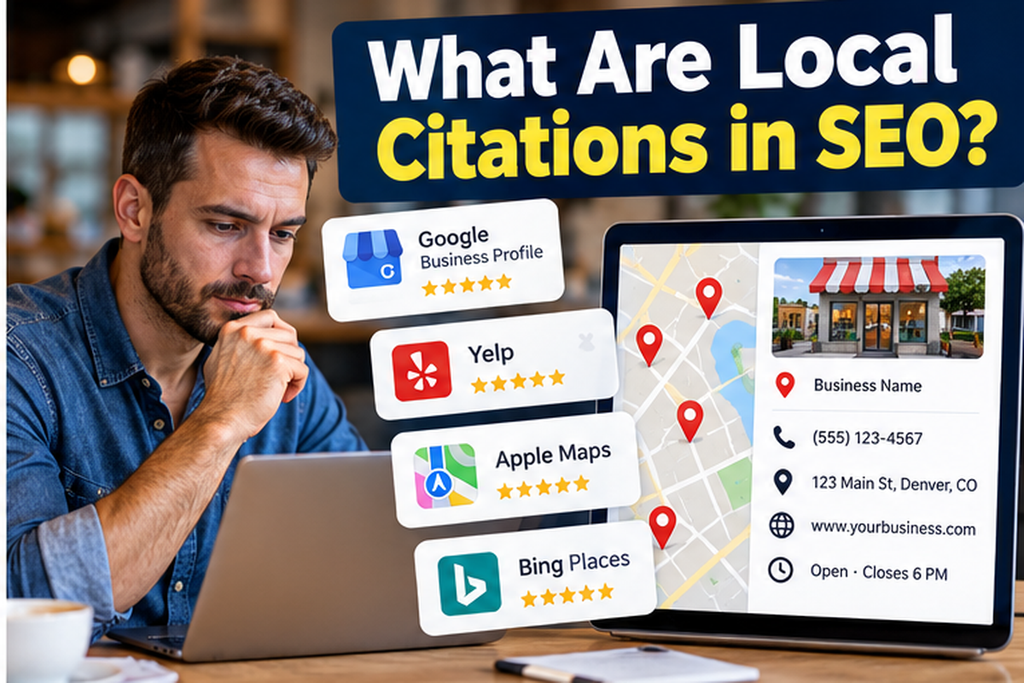
A local citation is an online mention of a business that identifies it through its name, address, phone number, or related details. Those core details are called NAP, while NAPW adds a website address. A citation can help customers verify your identity, compare nearby providers, and contact the right office, even without a clickable website link.
For example, a Denver electrician might appear in Google Business Profile, Apple Maps, Yelp, and a local chamber of commerce directory. Each profile should accurately describe the same real business, including its service category and operating hours. A wrong number or outdated address matters more than minor formatting differences because customers need dependable information every time they encounter your business online.
Structured and Unstructured Citations
Structured citations use designated fields on maps, directories, and business platforms. Unstructured citations appear naturally in newspaper stories, neighborhood blogs, association member pages, and community event coverage. Both can help, but relevant sources beat obscure directory submissions.
A citation is not the same thing as a backlink, which is a clickable reference to another website. Some listings provide both, while others mention only your business details. BrightLocal found in 2025 that one in five consumers searches locally through maps.
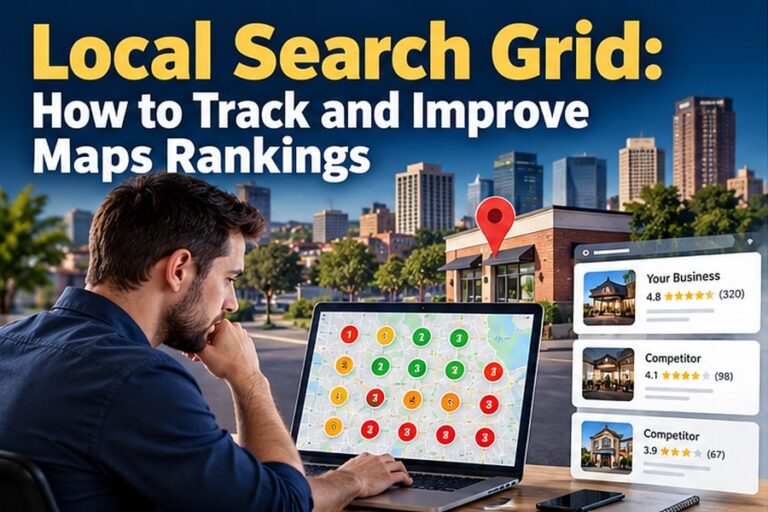
Citation accuracy and search rankings require separate checks. To know where you rank with local rank tracker, compare your visibility across different points on a local search grid rather than relying on one search from your office. Treat ranking changes as observations, not proof that a newly created citation caused them.
Why Local Citations Matter for Search and Customer Trust
Accurate citations make it easier for customers to identify the right location, call the correct number, and confirm when you are open. They may corroborate business details for search systems and provide customers with another way to discover you, but Google publishes no fixed citation ranking boost. Google names relevance, distance, and prominence as its main local ranking principles.
The need for accuracy extends beyond Google. BrightLocal’s 2026 survey found that the average consumer uses six review sites when choosing a business, and 71% of respondents used Google for reviews. Apple Maps usage reached 27%, underscoring the value of multiple accurate profiles.
Must-know Tip: Build citations for genuine discoverability first, not to hit an arbitrary submission target. A directory that sends qualified local visitors may be worth more than a large collection of listings nobody uses. Record where each listing appears so you can correct it when your business changes.
Citations and AI-Powered Discovery
AI-powered recommendations increase the importance of keeping business facts consistent, but they do not guarantee exposure. BrightLocal reported that 45% of respondents used generative AI tools for local recommendations in its 2026 survey. Whitespark’s 2026 expert survey ranked the quality of unstructured citations fourth among its proposed AI search visibility factors, reflecting expert judgment rather than a confirmed algorithm rule.
Myles Anderson, BrightLocal’s co-founder, summarized consumer reliance on reputation signals: “Reviews are stable, sticky, and more important than ever.” Citation platforms often host ratings, photos, and feedback as well. Citations establish identity, while reviews describe customer experience.
How to Build High-Quality Local Citations Step by Step
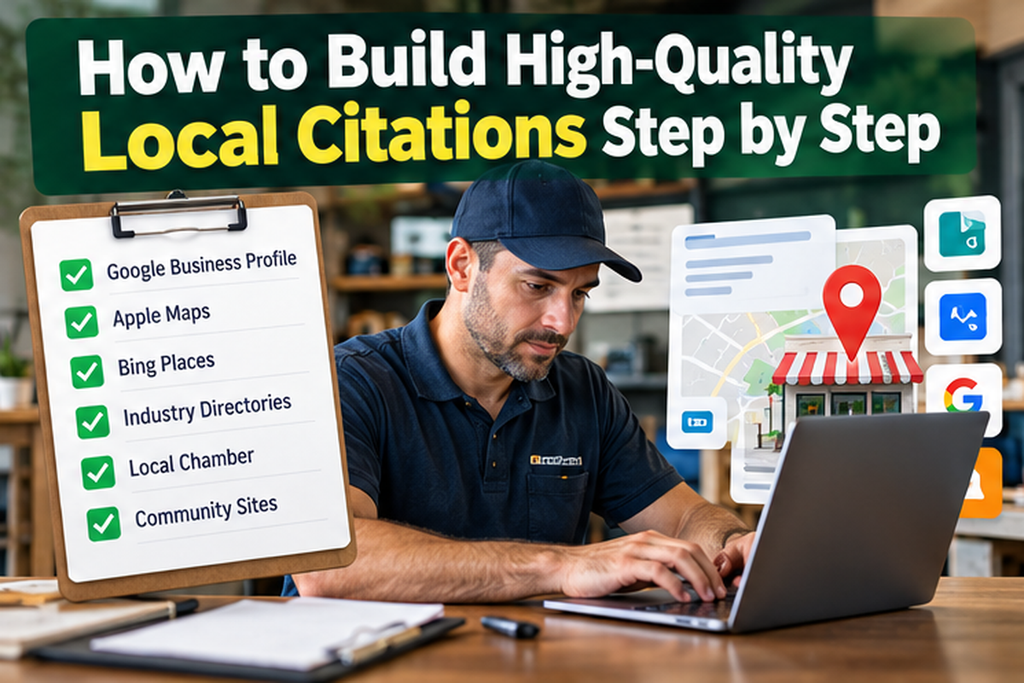
First, record your actual business name, location, phone, website, categories, and hours. Use the name customers encounter in the real world instead of adding keywords solely to influence search. Make sure your Google Business Profile follows Google’s address and service-area eligibility rules.
Search for listings under your current and former names, phone numbers, and addresses. Correct existing profiles instead of creating duplicates. Then prioritize platforms where potential customers already search, followed by relevant industry and city directories.
Local Citation Submission Checklist
- Verify your Google Business Profile and check business hours.
- Claim accurate Apple Maps and Bing Places records.
- Select reputable industry platforms, such as relevant professional associations.
- Add trusted local chamber, tourism, or community listings where appropriate.
- Save the listing address, login owner, submission date, and verification status.
Which Directories Deserve Priority?
Relevance beats submission volume. A licensed contractor may benefit from an appropriate trade association, while a restaurant needs strong food, travel, and local discovery profiles. Skip directories with misleading business categories, unrelated audiences, or suspicious demands for paid backlinks.
Must-know Tip: Keep the master record in a shared, access-controlled document so employees do not invent slightly different business details. Assign one person to manage account recovery and verification emails. Review the record before every new submission, especially after a move, rebrand, or phone change.
BrightLocal found in 2026 that 41% of consumers always read business reviews. Current photos, services, and review responses make listings more useful. Submit thoughtfully, then verify that each profile actually appears as intended.
How to Audit, Fix, and Measure Local Citations

An audit checks where your business appears and whether its details are accurate. Search your name, city, phone, and old addresses. Log each result as correct, incorrect, duplicate, missing, or awaiting verification.
First fix wrong numbers, locations, and hours. Claim listings when possible, submit corrections with supporting evidence, and request duplicate merges where the platform permits them. Save confirmations and follow up on unresolved requests.
Illustrative Case Study: A Dental Office Moves
Imagine fictional Oakwood Dental moving across Columbus, Ohio. Its manager fixes outdated addresses, two duplicates, and a wrong number before purchasing submissions. The team monitors corrections without attributing later rankings solely to citations.
Must-know Tip: Do not delete a legitimate branch merely because its address resembles another branch’s address. Verify location ownership before merging. Multi-location businesses need separate, accurately managed profiles for each genuine location.
Costs, Service Areas, and Return on Investment
DIY listings can be free but consume staff time. Paid services charge per listing, location, or subscription, so ask about ownership and cancellation. For a home-based service-area business, follow each directory’s address-hiding rules instead of publishing a private residential address.
Track accurate listings, referral traffic, calls, and local ranks. Compare fixed keywords and locations, considering competition and seasonality. BrightLocal’s 2026 survey found that 74% of respondents cared only about reviews from the previous three months, while 31% would use only businesses rated 4.5 stars or higher.
Darren Shaw said citations “lost about half a percentage point” in Whitespark’s 2026 expert survey. Its 47 experts assessed 187 factors, not Google’s private algorithm. Prioritize customer access, not promises of higher rankings.
Conclusion
What are local citations? They are online references that help people and search systems identify your business, confirm your details, and find trustworthy places to contact you. Accuracy matters more than volume, especially when an outdated number or address creates a frustrating customer experience. An accurate listing on a relevant platform beats dozens of unreliable records.
Begin by documenting your official business details, checking important existing listings, and fixing errors before submitting new profiles. Prioritize Google Business Profile, major map services, relevant industry platforms, and credible local directories. Then track profile accuracy, customer actions, and local search visibility without assuming every improvement came from citation building.
Citations complement your website, business categories, and customer reviews. Update changed details, review key profiles regularly, and retain profile ownership so future corrections remain manageable. The questions below address the practical decisions that commonly arise after your first audit.
Frequently Asked Questions About Local Citations
Are Local Citations a Google Ranking Factor?
Google does not publish a specific citation weight. Its stated local ranking principles are relevance, distance, and prominence. Citations support accurate discovery, not guaranteed rankings.
Do Citations Need a Website Link?
No, a business mention can qualify without a hyperlink. A linked listing may also send referral traffic. The citation’s business details should remain correct.
Are Free Citation Sites Worth Using?
Yes, when the platform is credible and relevant to customers. Many major profiles have free listing options. Avoid directories built mainly for link spam.
How Many Local Citations Should I Create?
There is no fixed target. Prioritize major maps and relevant industry directories first. Expand according to customer behavior and genuine competitor gaps.
How Long Does Citation Building Take?
Submission may take minutes, but approval varies. Search engines may discover updates later. No publication or ranking timeline is guaranteed.
Can I Build Citations Without a Website?
Yes, many directories allow eligible businesses without websites. You still need authentic contact and business details. Check each directory’s rules.
What Is the Difference Between Citations and Backlinks?
A citation identifies a business. A backlink is a clickable link between websites. One directory entry can contain both.
Should Service-Area Businesses Publish Home Addresses?
Not automatically. Follow each platform’s service-area rules and privacy settings. Never invent an office customers cannot visit.
Can Duplicate Listings Cause Problems?
Yes, customers may encounter conflicting numbers, hours, or reviews. Check whether profiles represent the same location. Merge or correct legitimate duplicates.
Can Citations Help With AI Recommendations?
Reputable mentions can make business details easier to corroborate. AI systems use different sources and methods. No citation guarantees a recommendation.



Comments
0 responsesNo comments yet. Be the first to share your thoughts.